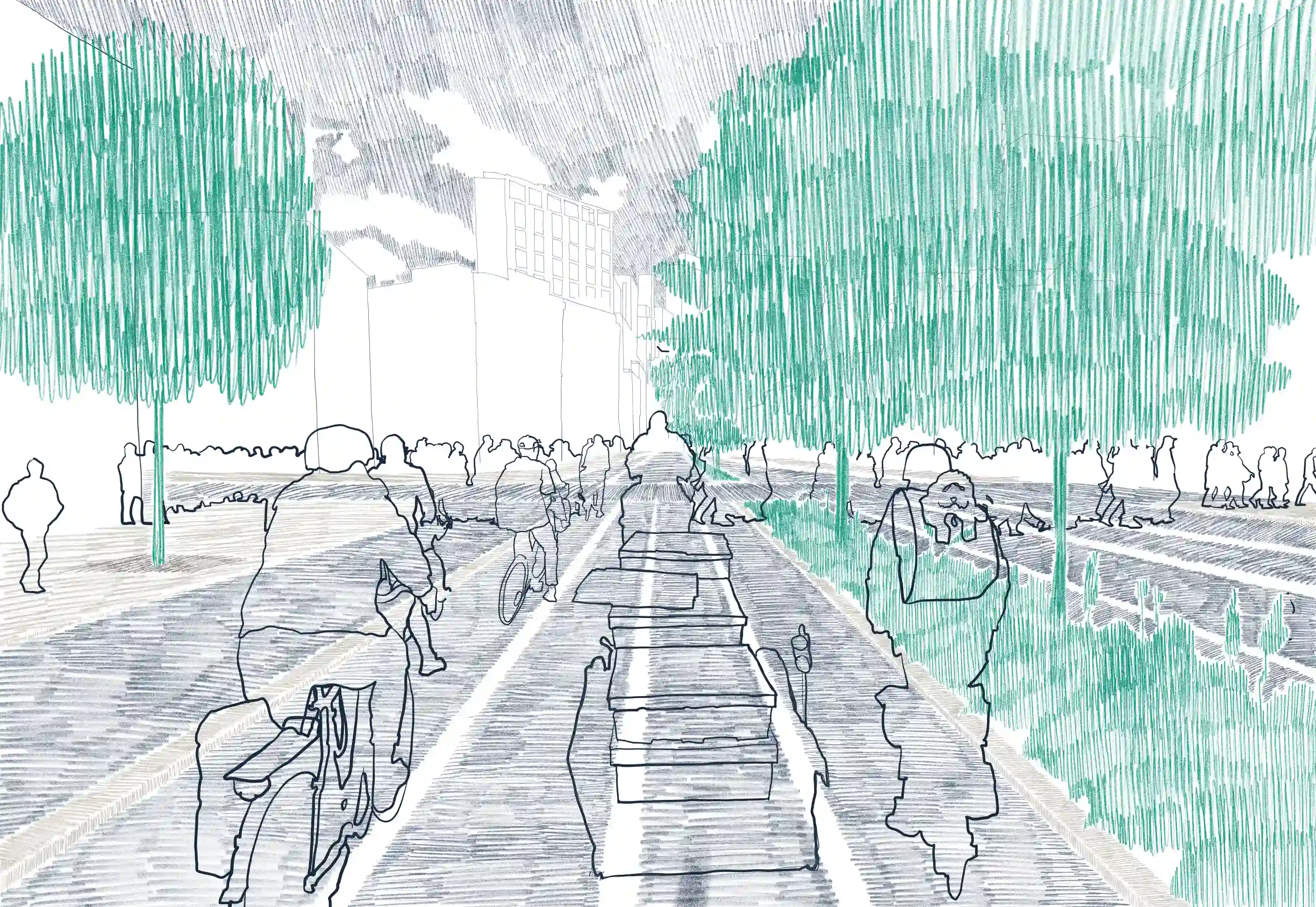
Raw notes: What is the next evolution of active travel?
Created: 19 February 2026
by Lana Radchenko
After cycling in London for the past 2.5 years, I have formed the impression that the current cycling infrastructure is built on an unfair "mixing" of users that makes little sense. A parent cycling with children or a teenage rider is forced to share the carriageway with a 44-tonne HGV. The contrast in size, level of protection, and nature of movement is enormous. From my perspective, several emerging trends could shape the next generation of cycling infrastructure and foster organic growth in active travel.
The 20% “Mobility Gap"
Approximately 20% of our population - children and teenagers - have no legal right to drive. By designing cities for cars, we are effectively telling one in five people that their independent mobility does not matter. They are forced to choose between a public transport system that doesn't always provide door-to-door service or an active travel network that feels like a survival course. To distribute space more equitably, we need not only viable, fully protected, and mature cycle routes but also measures to level the playing field between vehicles and bikes.

- 4 kg vs. 40,000 kg
- 2 m² vs. 37.5 m²
"Toothless" Cars
The shift to electric vehicles is a positive trend, though it addresses only one problem. Are current vehicle sizes optimal for an urban environment with 20-30 mph speed limits and increasing density in city centres? Land around economic hubs like London becomes more valuable year after year. If mixing bikes with cars is unavoidable, why not make vehicles more cyclist-friendly? This applies not only to light vehicles but also to lorries and trucks. What about shifting from trucks to cargo bikes within urban boundaries?
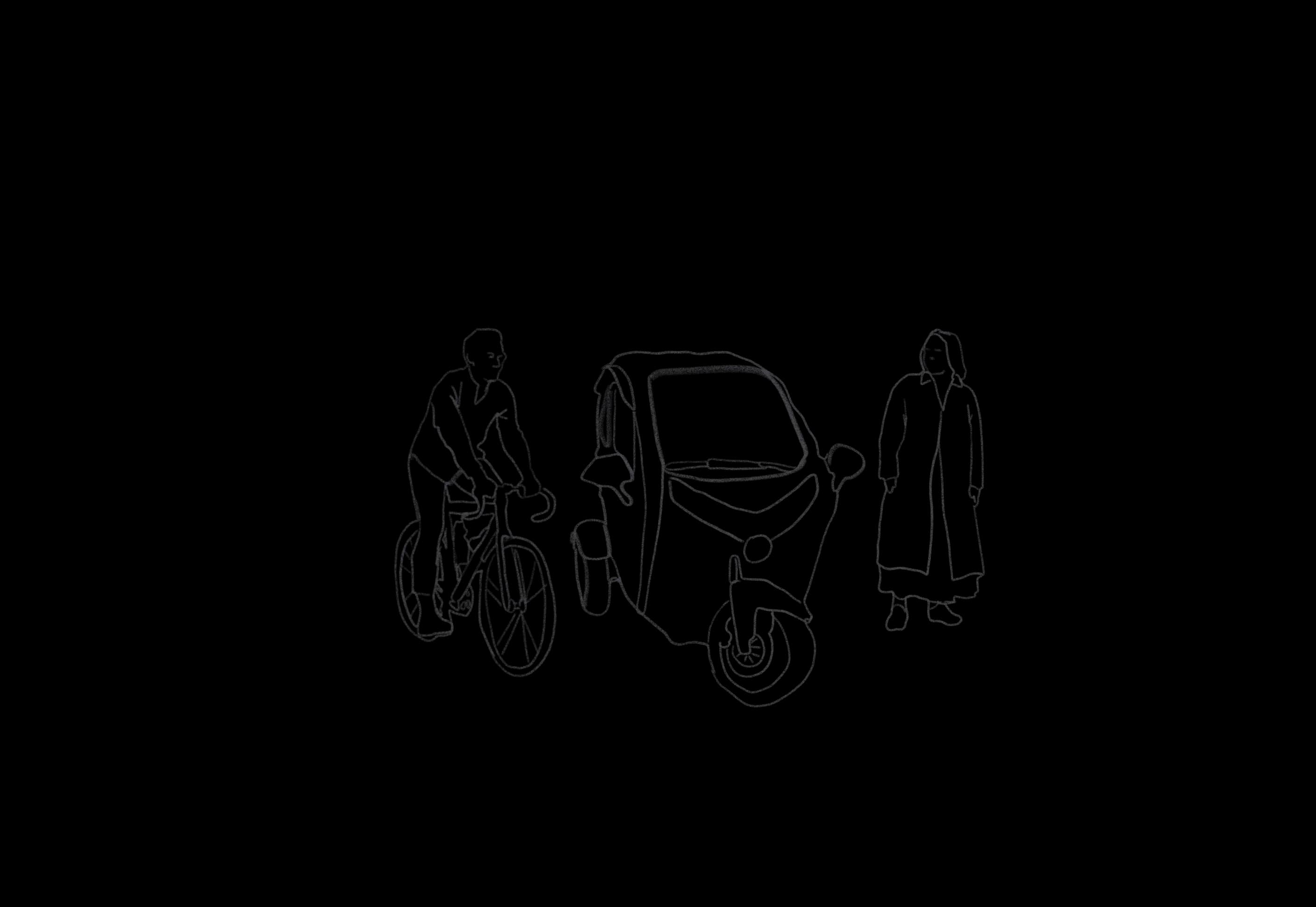
The "Tunnel" Trap: Why Pure Pedestrianisation Isn't Enough
Simply banning cars and creating pedestrian/cyclist-only zones isn't always the answer. Pedestrianised streets and popular green spaces may be vibrant at midday but can become unsafe "tunnels" or desolate corridors at night. True regenerative design isn't about exclusion; it's about intelligent integration, strategic routing, and thoughtful planning. The cycle network requires natural surveillance - the presence of diverse users at all hours to keep streets safe. The goal shouldn't be to create empty plazas but to reinvent the "urban car" and the "urban bike" so they can coexist without the threat of lethal collisions.
Beyond the "Standard" Bicycle
A notable trend is the diversification of bikes and their purposes:
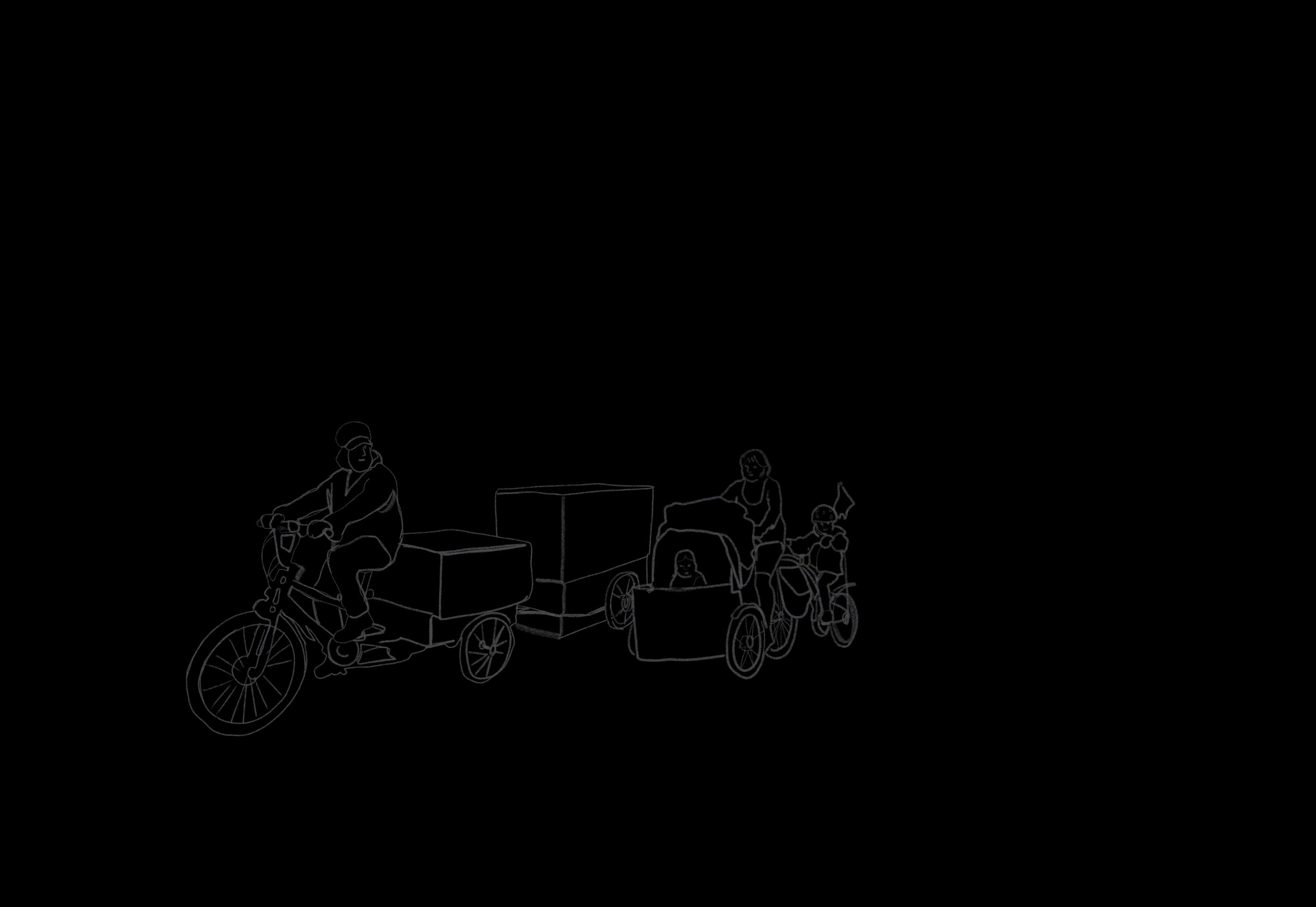
- Cargo bikes hauling groceries, goods, and children
- Micro-vehicles that blur the line between bike and car
- Adaptable frames for elderly users or those with disabilities
City Streets 2025, Summary Report, City of London
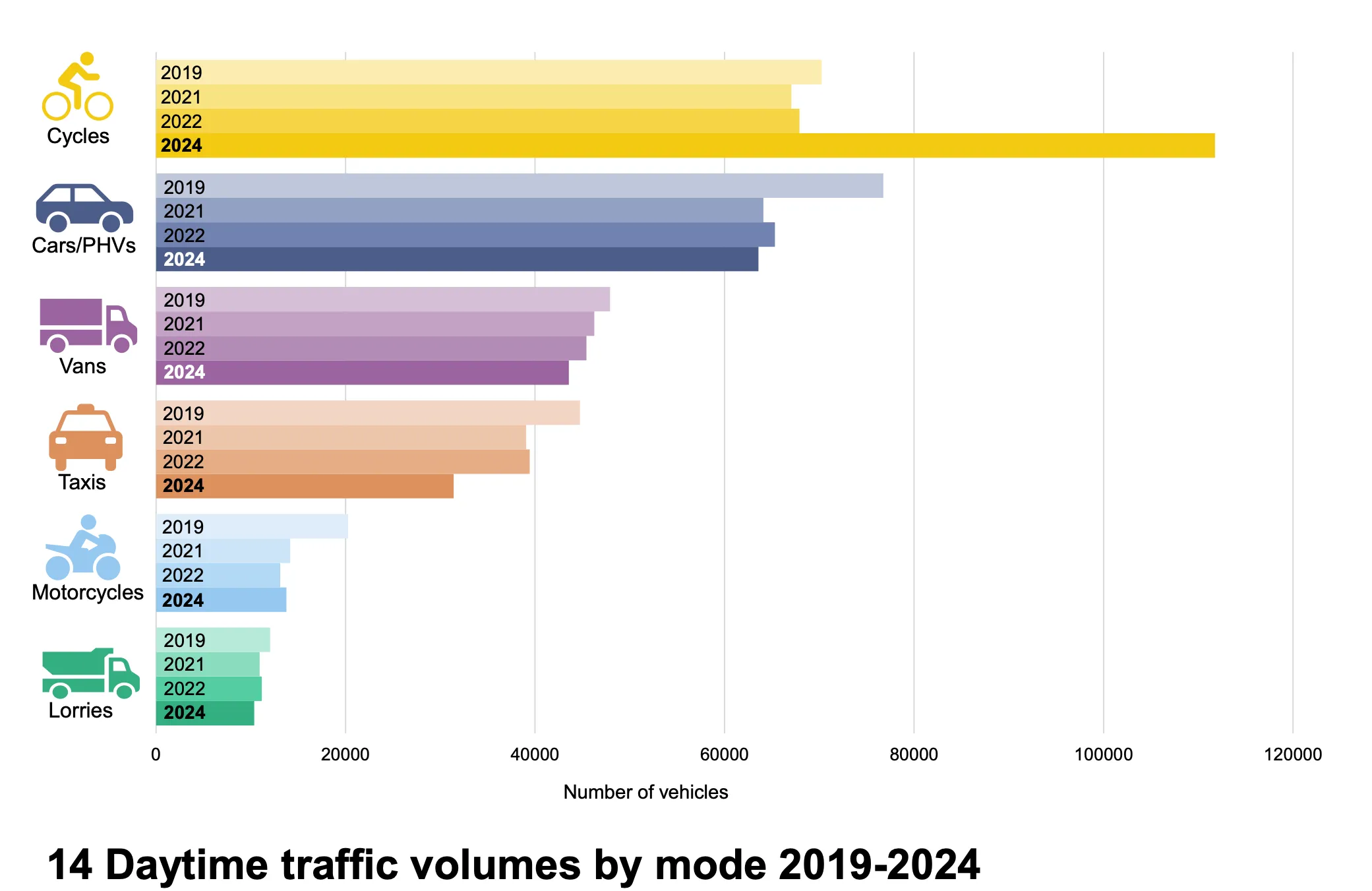
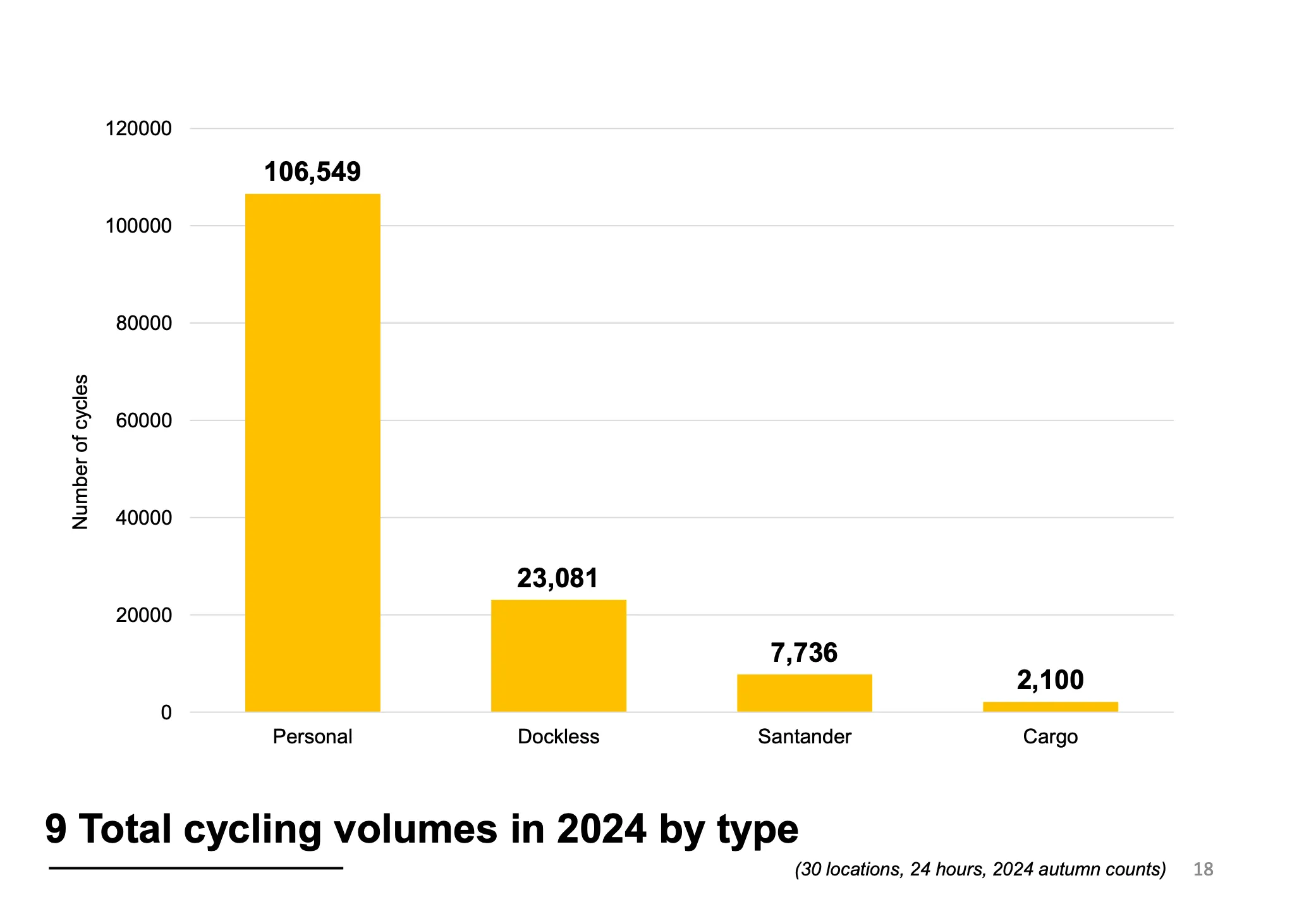
Reduction of Commute Time
To encourage more people to commute by bike, cycling must be more convenient than driving. A comfortable 30-minute ride is currently only feasible from Zones 1 to 3 in London. The most direct routes into the city centre are typically the most congested. This represents another point of inequity that could be addressed by dedicating the most direct routes to active modes of transport and redirecting cars to secondary, dispersed roads.